

Overview of Ancient Egypt Architecture
Ancient Egyptian civilization spans over 3,000 years, split into several civilizations and hence different architectural styles.
Most famously, Ancient Egypt is known for the Great Pyramids of Giza and the Sphinx. These are among the greatest architectural feats in early history; some conspiracy theorists even believe the Ancient Egyptians didn't actually build the pyramids... These grandiose buildings are utilized as tombs for the pharaohs.
In fact, most of what remains of Ancient Egyptian architecture has religious purposes. The majority of buildings are built with sunbaked mud brick and limestone, and the primary construction method was the post and lintel method.
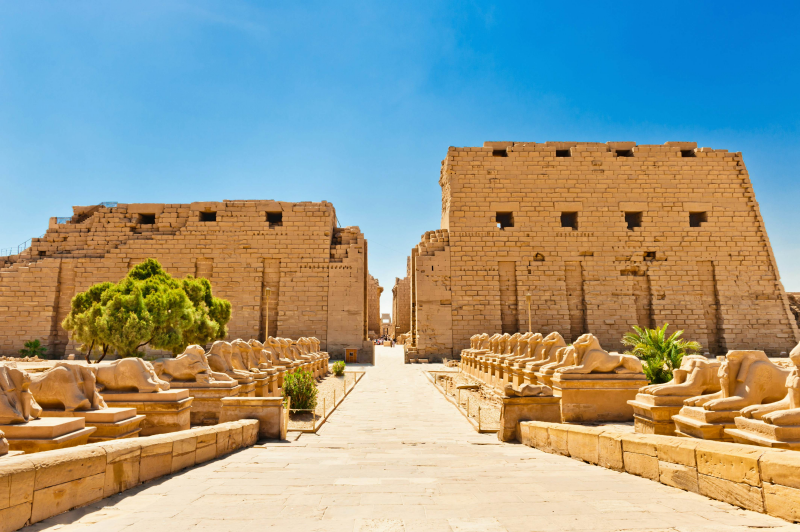
Due to being in proximity to the Nile River and the common village houses being made out of sunbaked mud bricks, most of the villages were destroyed by flooding. So, most of the architectural information we know is from religious buildings that remain. These massive structures are characterized by thick, sloping walls with few openings.

Ornaments and Motifs
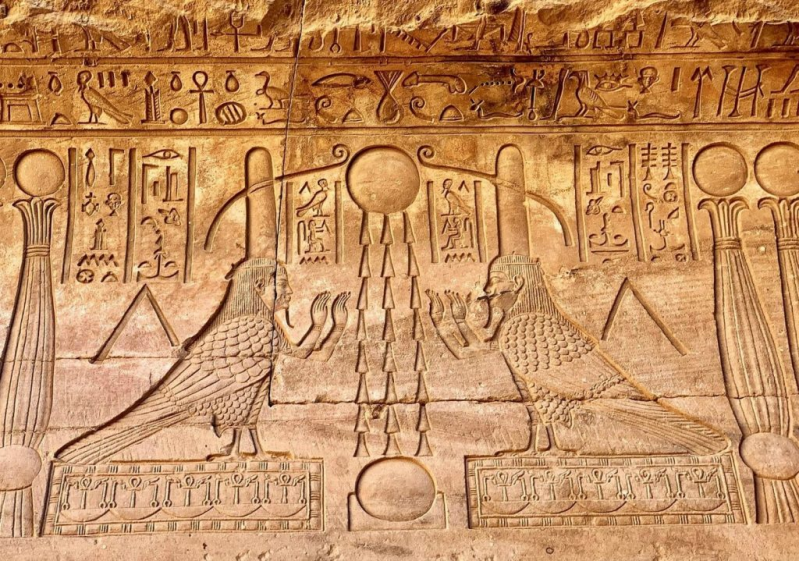
Both the interior and exterior walls of Ancient Egyptian buildings are lined with hieroglyphics. Motifs in Egypt hold great symbolic meaning, and the hieroglyphics are inscribed for decorative and documentation purposes for historic events.
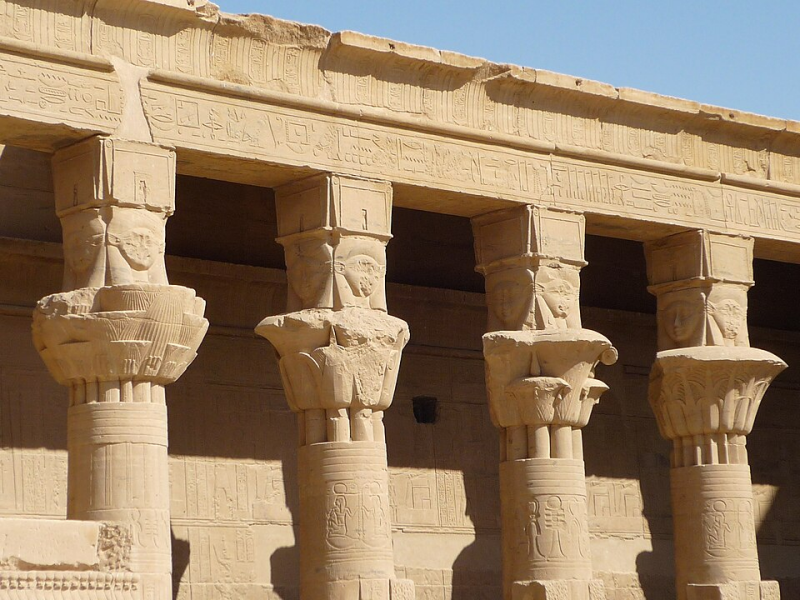
Columns
Around 2600 B.C, the first recorded architect in history, Imhotep, utilized stone columns to reflect the nature in Egypt, such as lotus and palm. Most famously, 134 columns lined up in 16 rows can be found in the Great Hypostyle Hall of Karnak. The tallest of these columns reach up to 24 meters in height.
Architectural Highlights
The Great Pyramid of Giza
The Great Pyramid of Giza is the largest of the Egyptian Pyramids. It is also the oldest of the Seven Wonders of the World and surprisingly remains largely intact. It was built as a tomb for Pharaoh Khufu, who ruled during the Old Kingdom period. It stands at 146.6 meters (481 feet) and was built with an estimated 2.3 million large blocks. Approximately 5.5 million tons of limestone, 8,000 tons of granite, and 500,000 tons of mortar were used to build this amazing architectural feat for its time.
The Sphinx
A sphinx is a mythical beast with the head of a human and the body of a lion according to Ancient Egyptian belief. It is viewed as a benevolent creature, with the head usually being depicted as a pharaoh. It is 73 meters (240 feet) long, 20 meters (66 feet) high, and 19 meters (62 feet) wide. The head is believed to be pharaoh Khafre, but archeologists are not completely certain. The Sphinx is made of limestone and has had countless restorations to keep this architectural beauty intact.
The Temple of Karnak
This temple is one of the largest religious monuments ever created. It covers roughly 247 acres of land East of the Nile River and is roughly half the size of Manhattan. During its peak, the Temple of Karnak was like its own city; it had offices, schools, breweries, bakeries, and more.
The Valley of Kings
The Valley of Kings is located on the West Bank of the Nile and is one of the most significant architectural feats in Ancient Egypt. It was used as a burial ground for pharaohs during the New Kingdom period. Skilled laborers were utilized, and copper tools such as chisels were used to carve the tombs from the valley's limestone cliffs. Also, each tomb is uniquely designed to match the individual pharaoh.
Key Takeaways
Ancient Egyptian style cannot be simply characterized by one style because of how complex and long Ancient Egyptian civilization stretched. However, the goal of Egyptian architecture was to preserve tradition and religion.
Create Your Own Website With Webador